Week 2 · Module 2
Campus Resources
The resources exist. Most first-gen students never use them. Not because they don't qualify, but because nobody told them they were there.
By the End of This Module, You Will Be Able To:
- Locate and describe the function of at least five major campus support services.
- Explain how to access each service: where it is, how to make contact, and whether it costs anything.
- Identify which resources address which problems, ideally before those problems happen.
- Build a personal resource map for your specific school that you can use during your first semester.
Module 2 Lesson
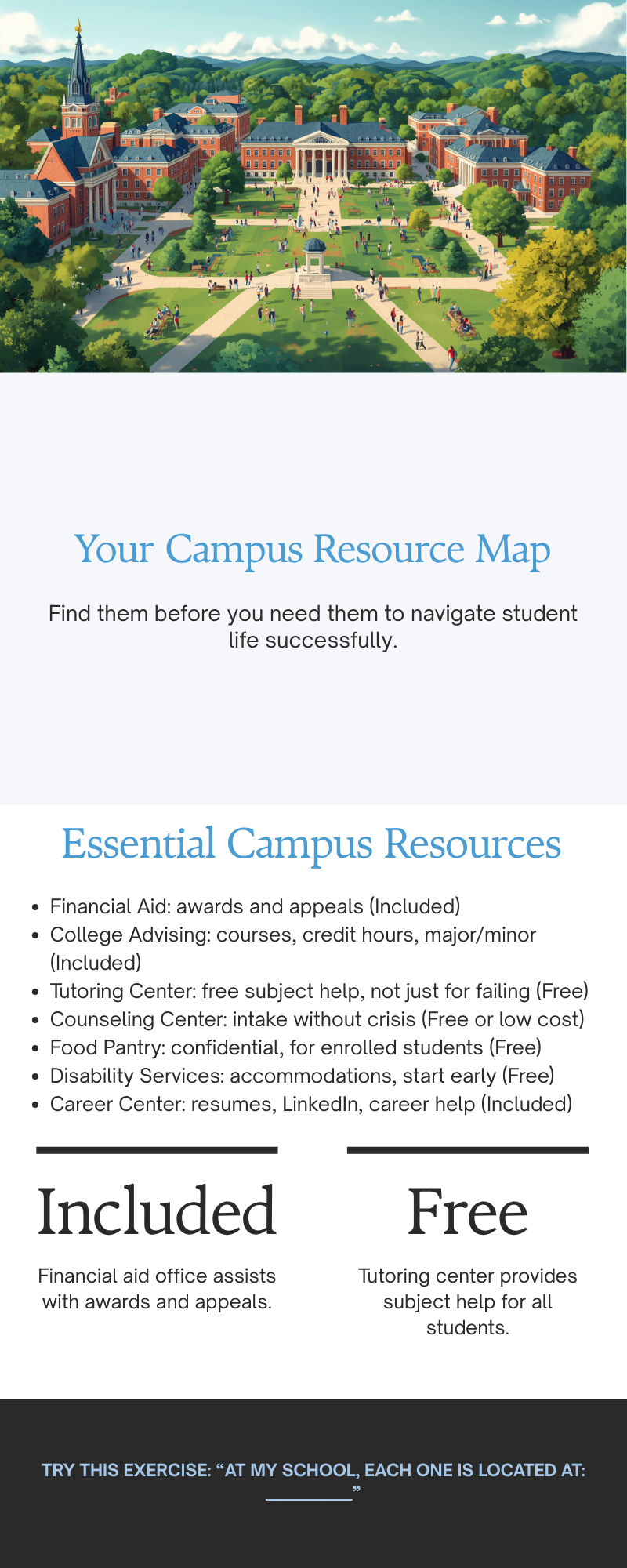
Why This Gets Missed
Every campus is full of help that students never use, and first-gen students use it least of all. Part of that is not knowing these resources exist, and part of it is a feeling that asking for help means you do not belong or that these services are for people worse off than you, but both of those assumptions are wrong. Almost every resource on this list is already paid for through your tuition and fees, so using it is not asking for a favor — you are collecting something you already bought.
The Financial Aid Office
Start with the financial aid office, because money problems end more college careers than grades do. This office helps you read your award letter, understand your loans, apply for emergency funds, and fix problems when your aid does not come through, and it is not just a fall-semester resource. If your situation changes during the year, a parent loses a job or your work hours get cut, you can file an appeal to have your aid reviewed, which most students never know is an option. Find the office, save the phone number, and know you can walk in.
The Tutoring Center
The tutoring center is free, and it is not just for students who are failing. Most tutoring centers offer drop-in help, scheduled appointments, and subject-specific support, often staffed by students who took the same class a year ago and did well. The students who use tutoring early, as a normal study habit, are using it exactly the way it was designed, because waiting until you are already behind is the harder path.
The Counseling Center
The counseling center handles mental health support, and there is a whole module later in this course about why that matters, so for now just know it exists, that an intake appointment is usually free or low cost, and that you do not have to be in crisis to make one. Waitlists get long around midterms, so it is worth knowing how to book an appointment before you actually need one.
The Food Pantry
The food pantry is on more campuses than students realize. More college students deal with food insecurity than most people realize, and nobody talks about it. Campus pantries are confidential and free to enrolled students without requiring proof of need. If your grocery money runs out before the month does, which happens to a lot of students, the pantry is there and you already qualify by being enrolled.
Disability Services
Disability services covers more than most students expect, including diagnosed conditions like ADHD, anxiety, learning disabilities, and chronic illness, and it can arrange accommodations like extended test time or a quieter testing room. If you ever struggled with timed tests or had accommodations in high school, this is the office that continues that support in college, but the process requires documentation, so it is worth asking early what they need.
Other Resources
Beyond these core resources, there are others worth knowing about: the career center (which you will use in Module 6), the writing center where someone reads your paper with you before you turn it in, the health center for physical care, the registrar for anything involving your official academic record, and academic advising for choosing classes and staying on track to graduate. Each one solves a specific problem, and they are all easier to use before things go wrong than after.
Look Them Up Early
Do not wait until you need a resource to find out where it is. When something goes wrong you do not want to be figuring out logistics at the same time. Find them now, before anything happens, and write down where they are.
Activity: Find Three
Step 1. Go to your school’s website and find three resources from the lesson. Choose from: financial aid, tutoring, counseling, food pantry, disability services, career center, writing center, or advising.
Step 2. For each resource, write down what it is called at your school, where it is located, how to contact it, and one problem it would help you with specifically.
Step 3. Pick the one resource you think you will need first and explain why.
Instructor feedback. Within 48 hours I confirm your access details are current and let you know if there is a resource you did not list that would help you.
Campus Resource Map: Assignment 2 (75 pts)
Download the assignment instructions and rubric.
What a Good Response Looks Like
Read through this before you write your own.
Technological Tools
What You'll Need
This module does not require any special software or accounts. As long as you have a working internet connection and a device, a laptop, desktop, or tablet works best, you can access everything you need.
← Previous
Assignment Due
Campus Resource Map
75 pts
Identify 6 resources across 3 categories specific to your school.
View full rubric →